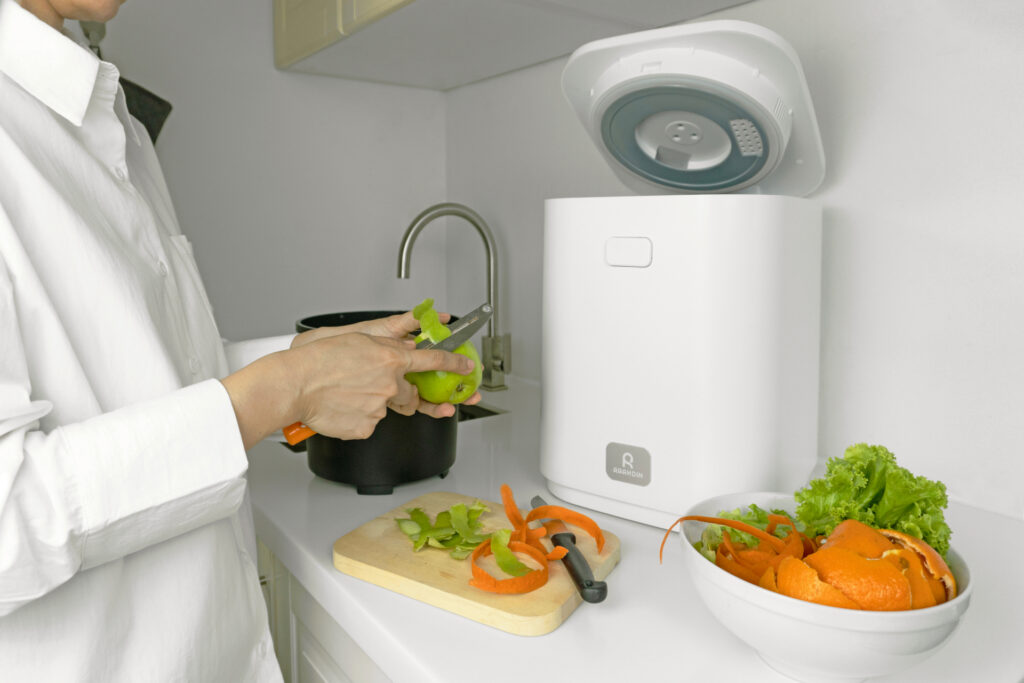
RAAKDIN 3L Model (3-Liter Grinding Capacity) An automatic food waste composter featuring a voice-guided operation system and enhanced odor-reduction performance. Ideal for cooking enthusiasts and those living in compact spaces.
Key Features:
- 3-Liter Grinding Chamber: Accommodates more food scraps, comfortably supporting daily use.
- Voice Notification System: Step-by-step voice guidance makes operation intuitive, even for first-time users.
- Odor Reduction: Upgraded filter and ventilation system for significantly improved odor control.
- Fast Processing: Reduces food waste volume by 90% within 6–10 hours.
- Versatile Grinding: Capable of processing chicken bones, fish bones, and shrimp shells.
- Produces Soil Amendment: Output is a dry, odorless, and insect-free soil conditioner.
Specifications:
- Dimensions: 28 x 33 x 36 cm
- Weight: 8.6 kg
- Brand: RAAKDIN (ECOTOPIA)
- Warranty: Local Manufacturer Warranty
Frequently Asked Questions
Does it use a lot of electricity in Thailand? (Specifically addressing the 24/7 operation concern)
No, the Raakdin 3L is designed to be very energy-efficient, even when operating continuously. It uses a low-wattage heating element and a small fan to manage the composting process. Based on typical Thai electricity rates (around ฿4 per unit/kWh), running the composter 24/7 for a full month would cost approximately ฿30 to ฿50. This is comparable to leaving a small LED light bulb on continuously. The constant operation is necessary to maintain the optimal warm, dry environment for the microbes to break down waste efficiently and without odor.
Can I put hard waste like chicken bones or durian seeds in this model?
No, you should not. The Raakdin 3L uses a natural microbial process (not grinding or shredding technology) to decompose waste. Hard, dense materials like chicken bones, durian seeds, mango seeds, or large avocado pits will not break down effectively. They can damage the mixing mechanism, disrupt the microbial balance, and simply remain intact in the bin. For best results, stick to typical kitchen scraps: fruit and vegetable peels, coffee grounds, eggshells (crushed), small bones from fish, and cooked food leftovers (without excessive oil).
What is the output like? Is it real fertilizer or just dried waste?
The output is a fully decomposed, soil-like humus—not just dried waste. The key is the proprietary microbial mix ("Bokashi" inspired) that ferments and breaks down the waste at a low temperature over 6-8 hours. This process preserves nutrients. The final output is cool, crumbly, rich in beneficial microbes, and can be used directly as a powerful soil amendment or organic fertilizer. You can mix it into garden soil, use it for potted plants, or add it to a compost pile to further mature. For optimal results as a fertilizer, it's recommended to mix it with soil and let it cure for 1-2 weeks before planting.
About Raakdin: We stand behind our product with a 2-year warranty and provide full local customer support in Thailand for peace of mind.